How a Coarse Material Washer Works: Washing Crushed Aggregate for Clean Stone Output
A common question in the aggregate and quarry industry is: how does a coarse material washer work?
Jeremy from Equip2 explains that a coarse material washer is an essential piece of equipment designed to wash smaller or crushed aggregate and stone, helping operations produce a cleaner, higher-quality final product.
In this article, we’ll walk through what the machine does, how it operates, and what you achieve at the end of the washing process.
What Is a Coarse Material Washer Used For?
The purpose of a coarse material washer is to wash crushed aggregate in stone.
The material being processed is usually between 10mm and 100mm in size. At this stage, aggregate often contains unwanted material such as:
- Clay
- Crusher Dust
- Dirt
These contaminants can remain even after screening because they cannot always be removed through a screening process alone.
A coarse material washer is designed specifically to scrub and wash this material so that the finished aggregate is cleaner and more suitable for use.
How Does a Coarse Material Washer Work?
A coarse material washer operates using a combination of water, scrubbing action, and material movement through a bath.
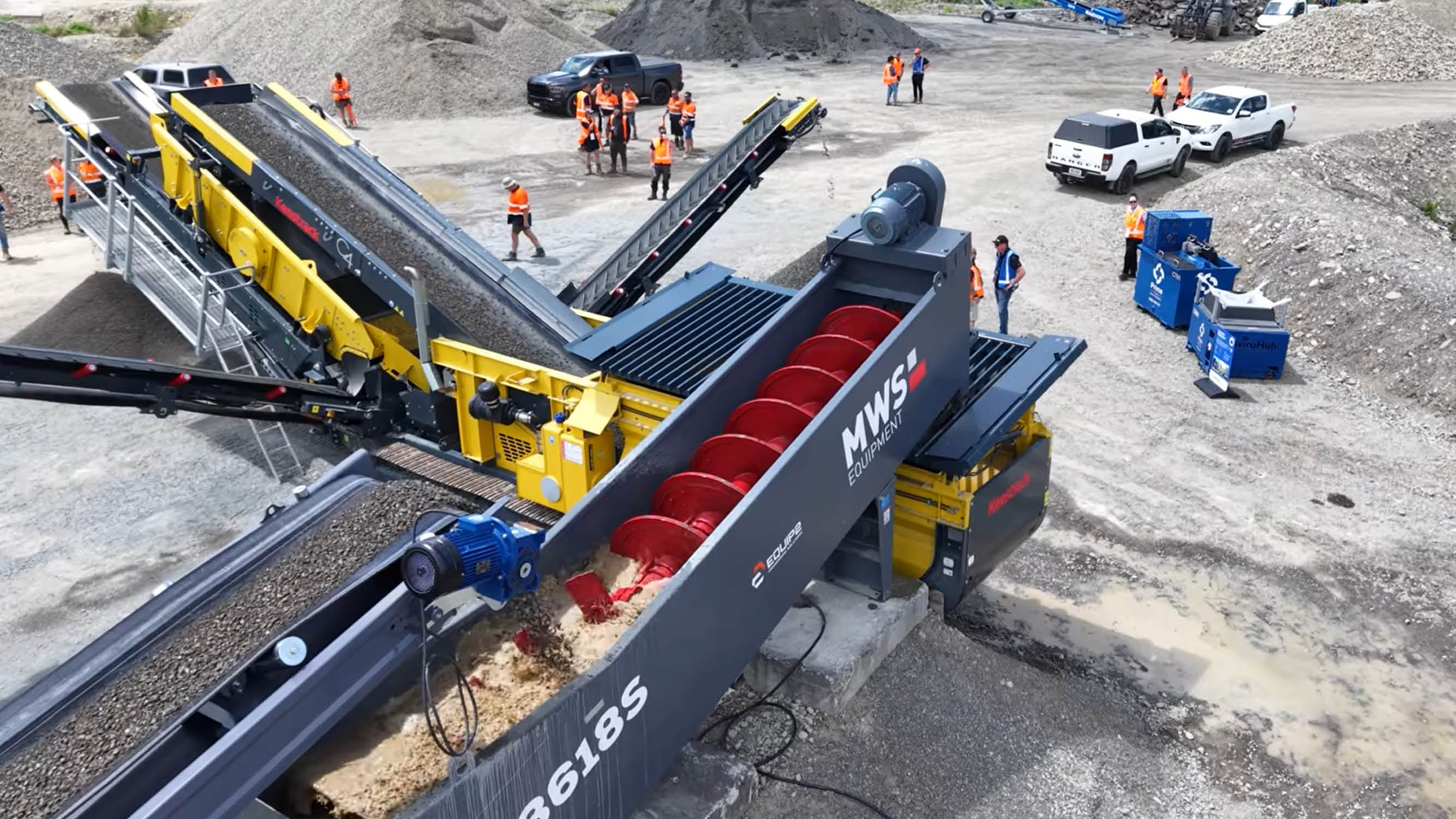
Inside the machine is a large bath that is filled with water to a set operating level. Aggregate enters the washer from a feed conveyor and drops into the bath section.
From there, the washing process begins.
The Role of the Central Auger and Pedals
At the lower end of the bath is a central auger. Attached to this auger are pedals that provide the primary scrubbing action.
Jeremy explains that these pedals spin at around 30 rpm, scrubbing the stone as it moves upward through the washer.
This mechanical action ensures the aggregate is thoroughly cleaned as it travels through the bath.
Scrubbing Action and Material-on-Material Cleaning
In addition to the pedals scrubbing the stone, the washer also creates a bed of material at the bottom of the bath.
This means the stone is not only being scrubbed by the machine — it is also scrubbing itself as it turns and moves upward.
This combination of mechanical scrubbing and material-on-material action is what makes the coarse material washer so effective at removing stubborn dirt and crusher dust.
Removing Organics, Silt, and Fine Contaminants
As the aggregate is scrubbed in the water bath, unwanted material is separated from the stone.
Jeremy notes that whites and organic material get floated off the back of the washer and discharged away from the clean product.
Meanwhile, the cleaned aggregate continues moving up the screw toward the discharge point.
Washed Aggregate Discharge and Final Product
As the stone reaches the top of the washer, the water leaves the aggregate and it is discharged out of the end of the machine.
The result is a scrubbed, clean aggregate that is free of:
- Silt
- Dirt
- Crusher Dust
- Organic Material
This washed aggregate is ready for use in a wide range of applications where clean, high-quality stone is required.
Learn More About Coarse Material Washing Equipment
A coarse material washer is a key solution for producers who need to remove clay, dirt, and crusher dust that screening cannot eliminate.
As always, if you have any questions about how coarse material washers operate, please reach out to the team at Equip2.
-