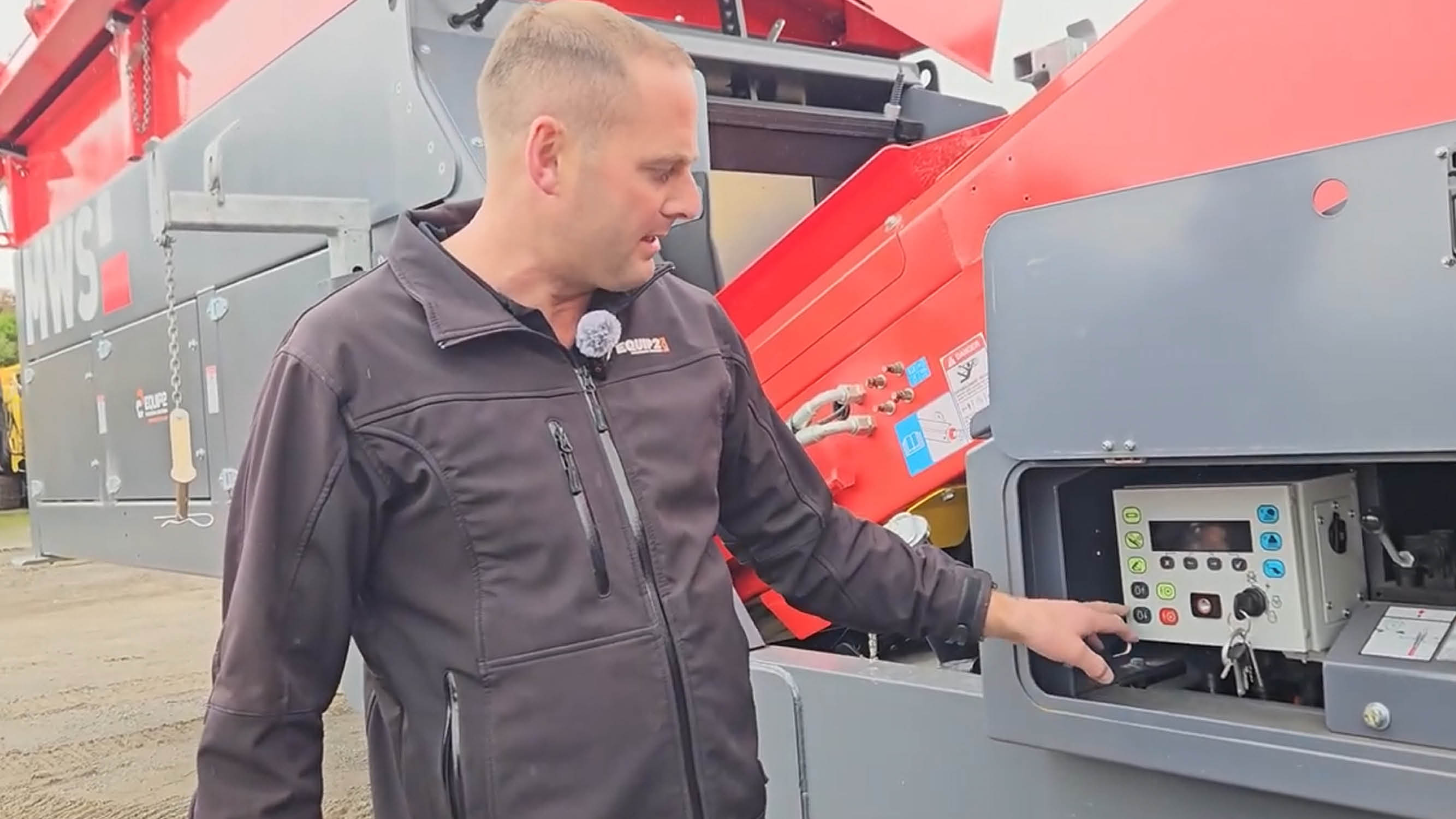
S130 Rinsing Screen Walkthrough: A Closer Look at This Mobile Washing Plant
If you’re looking at mobile washing plants for quarry and aggregate work, the S130 rinsing screen is a machine that comes up for good reason. As part of the MWS mobile washing range, it’s built to handle high tonnage, provide flexible product splitting, and support different washing and dewatering setups. In this walkthrough video, Bert Hart from Equip2 takes us around the S130 and explains the key features of the plant — from the hopper and control panel through to the screen box, water system, and sand chute. Here’s what he covers.
Where the S130 Rinsing Screen Is Used
The S130 is used in many quarrying and aggregate washing applications, including:
- Splitting concrete aggregates
- Washing roading chip
- Washing decorative landscaping materials
- (in rare occasions) soil washing
Built for Efficient Loading: The Hopper and Tipping Grizzly
The S130 starts with a large volume hopper bin, giving operators plenty of capacity to keep material flowing into the plant.
On top of the hopper is a tipping grizzly, which is controlled via remote. That means if oversized stones need to be removed, the operator can activate the tipping function and flick them off quickly.
Bert also points out that the hopper extensions are folded down in the walkthrough, but during normal operation they’re folded up to give the machine the optimum width for front-end loader feeding.
Straightforward Controls That Keep the Plant Moving
From the control panel, operators run the full screening plant. Bert walks through the main functions, including options for:
- Lights
- Diesel fuel pump
- Hopper operation
- Tipping grizzly control
- Engine revs
The S130 also uses hydraulic levers for tracking, with the tracks operated via remote control. From the same control area, operators manage the conveyors and screen box.
Adjustable Conveyor Speeds to Protect Belts and Rollers
One practical detail Bert highlights is that the S130conveyors are speed adjustable.
This matters because chevron belts running too fast can cause material to roll back. Over time, that can lead to damage - including wear on rollers and even belt piercing. With speed adjustment available, operators can tune the conveyor performance to suit the material and reduce unnecessary wear.
CAT C4 Power and a Triple Pump Hydraulic Setup
Inside the engine compartment, the S130 uses a CAT C4 engine, which Bert describes as “very, very reliable.”
He also notes that the filters and the water fuel separator are easy to access — an important factor for day-to-day servicing.
Fuel burn is stated at approximately 14 to 16 litres, and the plant includes a massive triple pump system. This is what drives the hydraulic components of the machine.
The third pump provides the option to drive a dewatering unit, meaning the plant can be set up to run equipment such as:
- A bucket wheel
- Single or dual sand setup
- A sand screw
The Screen Box: 14x5 Three Deck (with Two Deck Option)
The S130 uses a 14x5 three-deck screen box, and it’s also available as a two-deck version.
For operators comparing sizes, Bert mentions the next machine up in the range: the S190, which features a 6 metre by 1.5 metre screen deck.
A Handy Feature for Three-Way Splits and Blending
A feature that stands out in the walkthrough is the transfer conveyor.
If operators decide to do a three-way split, the transfer conveyor can reverse direction. This allows the mid split and top split to be pushed onto a single belt.
Bert explains this is done simply by flicking a lever and unbolting the back chute of that conveyor. This setup gives operators the ability to blend those two products onto one belt.
Rubber-Lined Sand Chute and Dewatering Connection
Underneath the sand chute is where the water and sand are captured. Bert notes that this chute is completely rubber lined, which helps provide excellent wear life.
From here, operators can couple on a rubber boot, which sends the sand and water to the dewatering screen.
Dual Sand Setup: Two Sand Products from One Plant
For sites that need more than one sand product, the S130 can be configured for dual sand.
Bert explains that in this setup, the sand chute becomes a split box, and a double pipe option is fitted. This allows two products — for example, a plastering sand and a concrete sand — to be diverted through two hoses to the dewatering unit.
Maintenance Access and Hydraulic Connections
Access around the S130 is also highlighted in the walkthrough.
Bert shows how sections can be unbolted and a plate hinges down, giving access underneath the screening box. Hydraulic components are also visible here, allowing operators to clip in hydraulic hoses when setting up the dewatering plant.
Water Distribution You Can Tune on the Fly
From the catwalk, Bert points out one of the key operational benefits of the S130: water tuning.
The plant includes adjustable water distribution across:
- Top deck valves
- Mid-Split pipes
- Bottom deck spray
This gives operators the ability to tune the plant depending on conditions, whether water availability is limited or whether more water is required for washing performance.
Boiler Box for Early Saturation
One of the most important points Bert makes in the walkthrough is the importance of saturating material as soon as it hits the top of the screen box.
The S130 includes a feature called a boiler box, designed to hit material with water right at the start. The goal is to saturate the feed immediately so that once it reaches the screen cloth, the material dissipates faster.
Radial Oversize Conveyor for Stockpile Flexibility
At the bottom of the plant, Bert shows the oversized belt, which sits on a radial. This gives flexibility if operators want to move that material around — including blending it with oversized stone coming off the grizzly.
Output and Water Requirements
Bert summarises the S130 as a plant that can do around the 300 tonne per hour mark.
Water intake is described as approximately:
- 1 cubic metre of water per tonne of material
At higher tonnage, that can mean up to 250 cubic metres per hour required. At lower tonnage, Bert notes around 130 cubic metres per hour going through the plant.
Want to Know If the S130 Fits Your Operation?
This walkthrough gives a clear view of what the S130 rinsing screen offers: a mobile washing plant built around a large hopper, adjustable conveyor speeds, a three-deck screen box, tuneable water distribution, and the ability to connect to different dewatering options.
If you have questions about the S130 or want to discuss how it would suit your quarry, the Equip2 team is available to help.