From Stockpile Liability to Revenue Stream: How Winstone Aggregates Got a Wash Plant in the Ground in Under a Month
We ran the numbers and quickly came to the conclusion it would be a really good business opportunity. It made a lot of sense. - Craig Lee
Every quarry generates it. The scalp material off the primary crusher that piles up with limited sales potential. At Belmont Quarry in Wellington, Winstone Aggregates had been accumulating 40mm and 20mm minus material for years - a significant stockpile with very limited sales options. The question was what to do with it. “It’s a finite resource,” says Craig Lee, North and South Island Regional Manager for Winstone Aggregates. “How do we utilise that material as optimally as we can?”
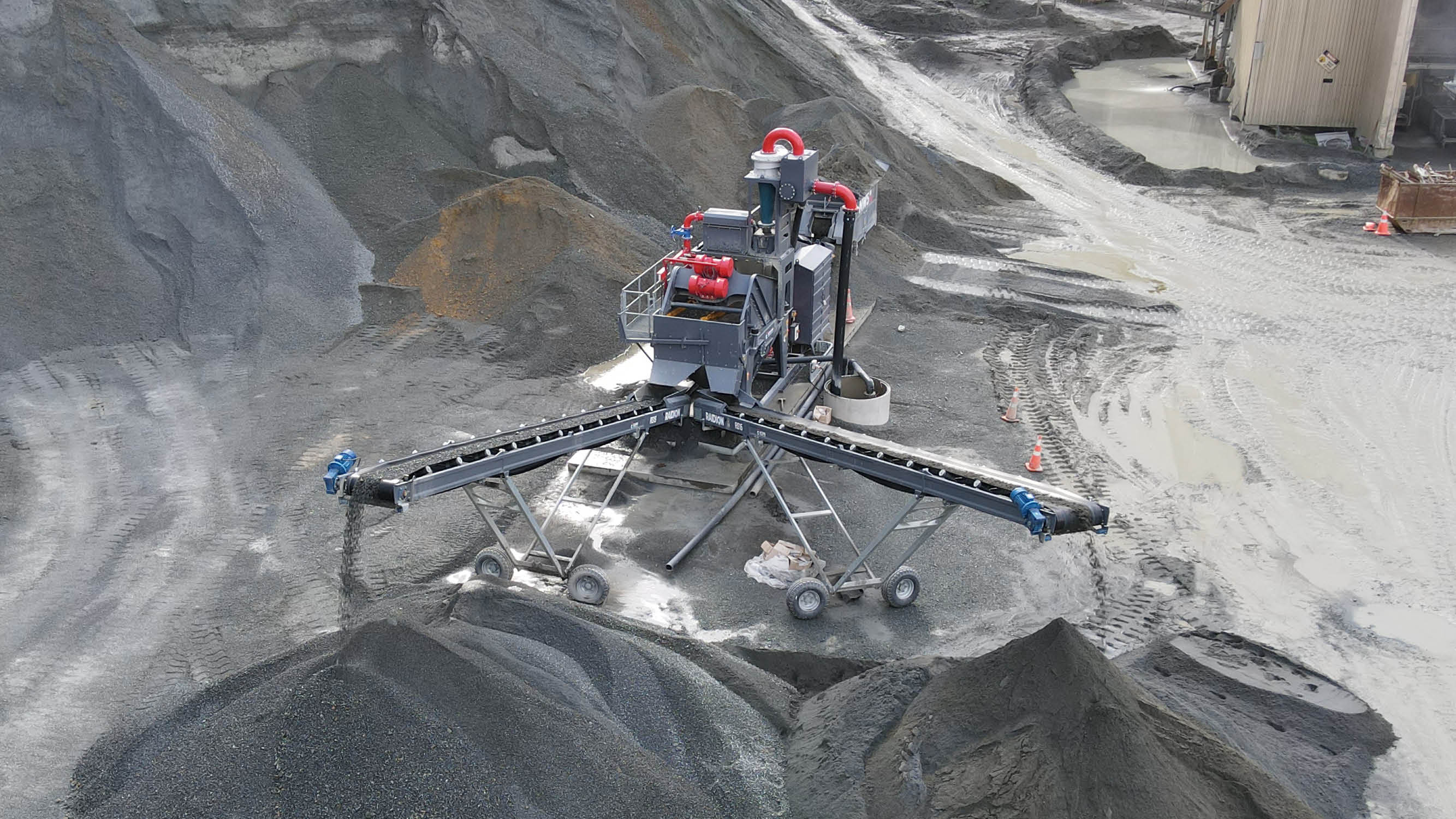
The answer came partly by chance. Winstone had been brainstorming solutions when Craig and his team attended an Equip2 open day where a wash plant was being demonstrated. “We quickly thought that would be potentially a very good solution for our issue,” he says. Working together with the Equip2 team, they pulled together a business case. “Ran the numbers, and quickly came to the conclusion that it would be a really good business opportunity. It made a lot of sense.”
Understanding the Problem Before Picking Up a Pencil
Before any engineering begins, Equip2 spends time understanding the site, the material, and the commercial problem the client is trying to solve. For Winstone, the brief was clear: reprocess a growing liability stockpile through a wash plant to produce higher-value sand and chip. Getting that commercial logic established early meant the project never lost its purpose as the complexity grew.
Working Through the Detail
The high-level theory was relatively straightforward, as Craig puts it; “We have a wash plant. We can reprocess this material, take a lower value product into higher grade products.” But as always, the complexity was in the execution. Concrete foundations, water mains, electrical services, traffic flows, plant positioning - Craig describes it plainly as “quite a bit of devil in the detail.”
"That's where the Equip2 team did help - a lot of really good ideas," says Craig. "Having tilt slabs versus pouring concrete, good inputs around location for ease of traffic management, waterflows, electrical services."
Not just supplying equipment and stepping back - working through the site-specific decisions that determine whether a project runs smoothly or blows out.
That’s where the Equip2 team really did help - a lot of really good ideas. Good inputs around where it could be located for ease of traffic management, water flows, electrical services.

Owning It All the Way to the End
Craig is direct about where most quarry capital projects come unstuck. “You’ve always got lots of good opportunities, project ideas - but often the hard part is actually having the time and effort to solely focus on a key project. You have so many things coming at you: environmental, safety and normal business as usual.” Equip2’s Jeremy stepped in as dedicated project manager, handling subcontractors, suppliers, procurement, and the day-to-day admin - while keeping Winstones informed throughout.
“It just took a lot of the heavy lifting - the phone calls, the admin - off our plates,” Craig says. “Which allowed the project to get done, implemented a lot quicker than it would have if it was just us by ourselves.” Craig and his Quarry Manager stayed focused on day-to-day operations: fixed plant, extraction and processing - their actual job.
The result: from confirmed purchase order to an operational wash plant in under a month.
The Results
There are still a few things being optimised - water supply to the plant is chief among them - but Craig is clear on the early signs. “The trials we have run are looking really good. The sand quality is good. It’s a nice clean chip that we can reprocess through our fixed plant to shape up.” Full-time running is still being bedded in, but the fundamentals are sound.
For Winstone Aggregates, it’s a new revenue stream from material that had long been an operational footnote. For other operators sitting on similar problems, Craig’s take is practical: “Often companies are pretty thin and people are expected to wear lots of hats. If that’s the case, I’d highly encourage people to explore options - and if they think having someone else manage the whole process works, then yeah, I’d encourage people to explore that opportunity.”
That’s how Equip2 approaches processing plant projects - one team responsible for the whole job, from the initial conversation to a plant running in production.
Within three weeks to a month from getting the purchase order - getting it in the ground and running. That’s a pretty good timeframe.