How to Manage Silt and Wastewater with Easy Settle Ponds
Every wash plant has the same by-product: dirty water full of fine silt and clay. Handle it badly and you lose water, fill your ponds faster than you can dig them out, and end up stopping production to clean up. A common question we get at Equip2 is: how do I manage my wastewater and silt using an easy settle pond system?
In this guide, Jeremy from Equip2 Processing Solutions walks through a working system on site, and we break down each stage, why it works, and what to think about before setting one up on your own site.
Why silt management matters
Wash water can't simply be sent straight back into the plant. Industry guidance notes that dirty wash water can carry around 10% ultra-fine solids - enough to stop it being reused without treatment. Leave those fines in the water and they end up back in your product. Send them to a single open pond and it fills quickly, needs regular digging out, and takes up space many sites don't have.
A well-designed water and silt system solves three problems at once:
- Water - more of it is recovered and sent back to the plant, so you draw less fresh water.
- Product quality - silt is removed from the circuit instead of recirculating.
- Uptime - silt is contained in a way that lets you keep running while you clean out.
Stage 1: The thickener (water treatment plant)
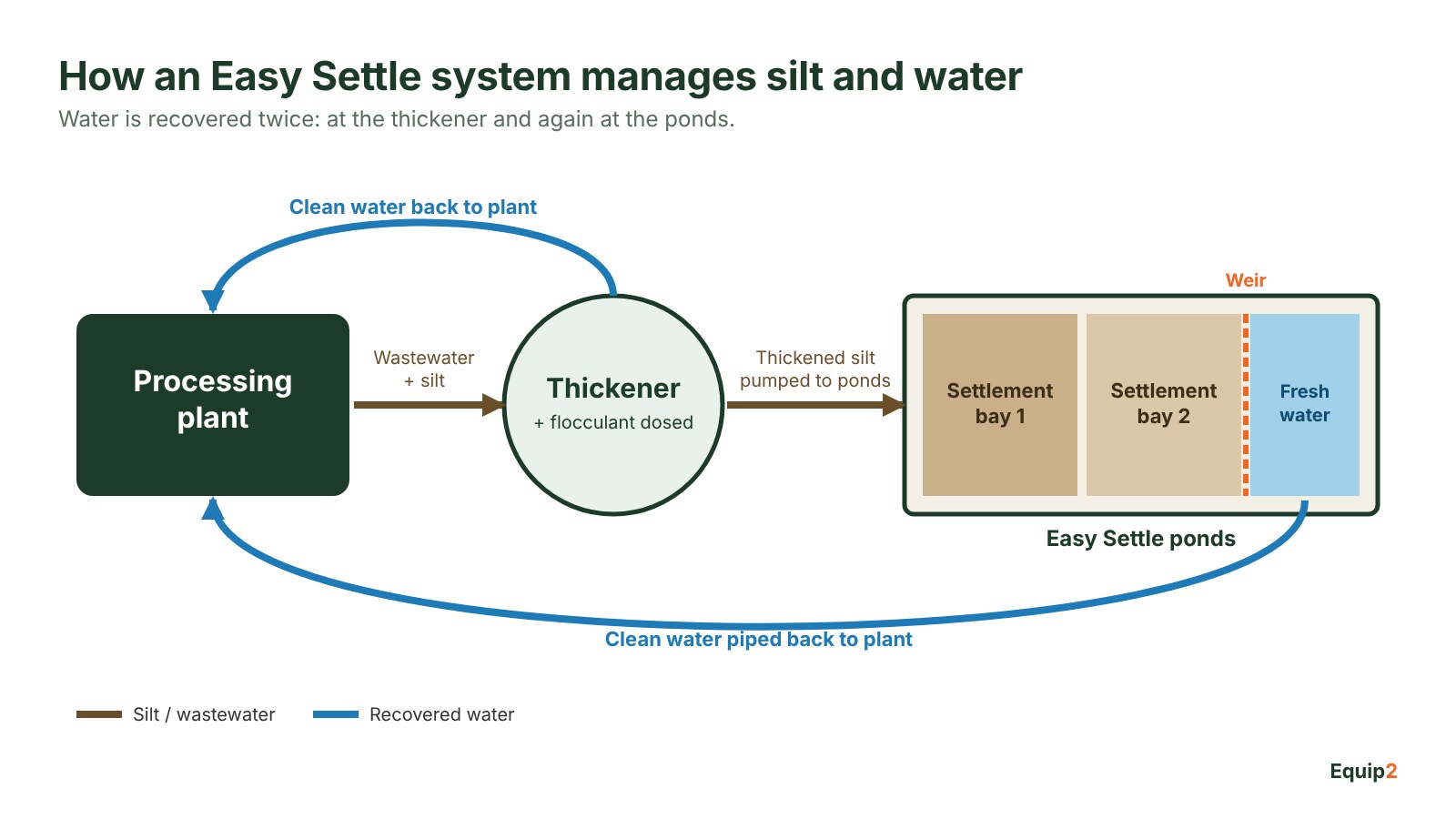
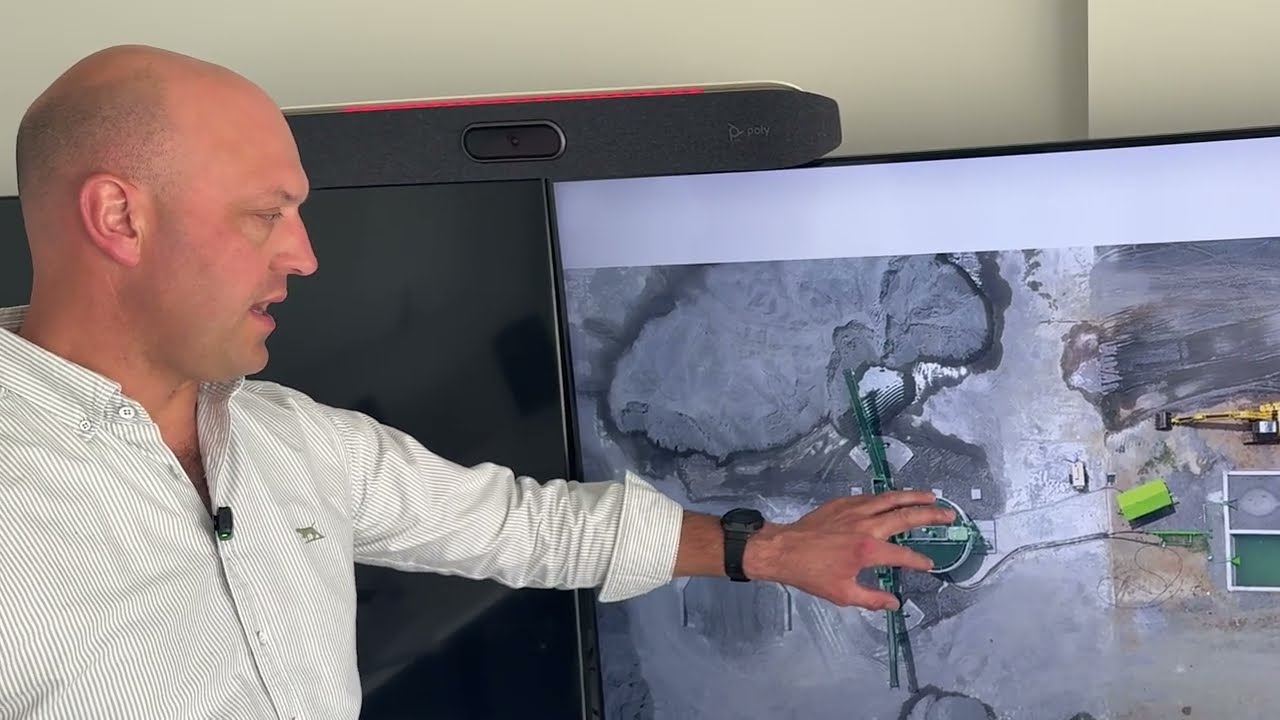
The system starts at the processing plant, which is coupled with a water treatment plant, also known as a thickener. Wastewater and silt from the plant flow straight into the thickener.
As it enters, the water is dosed with a flocculant - a chemical additive that makes fine particles clump together so they settle much faster. The silt drops to the bottom of the thickener, while clean water is drawn off the top and sent straight back to the plant for reuse.
"The flocculant helps settle the silts into the bottom of the water treatment plant. And the fresh water is then floated off, and reused in the plant." - Jeremy, Equip2
This is where most of your water is recovered. Industry figures put thickener water recovery at up to 85%, with the settled material typically discharging at around 40% solids. Results depend on your material, so treat these as a guide, not a guarantee.
Getting the flocculant right
Flocculant dose isn't one-size-fits-all. The right product and dose depend on your clay and fines content, and over-dosing can actually make water cloudier as well as costing more. The best practice is to run jar tests on your own wash water to set the starting dose, then fine-tune once the plant is running.
Stage 2: The Easy Settle ponds
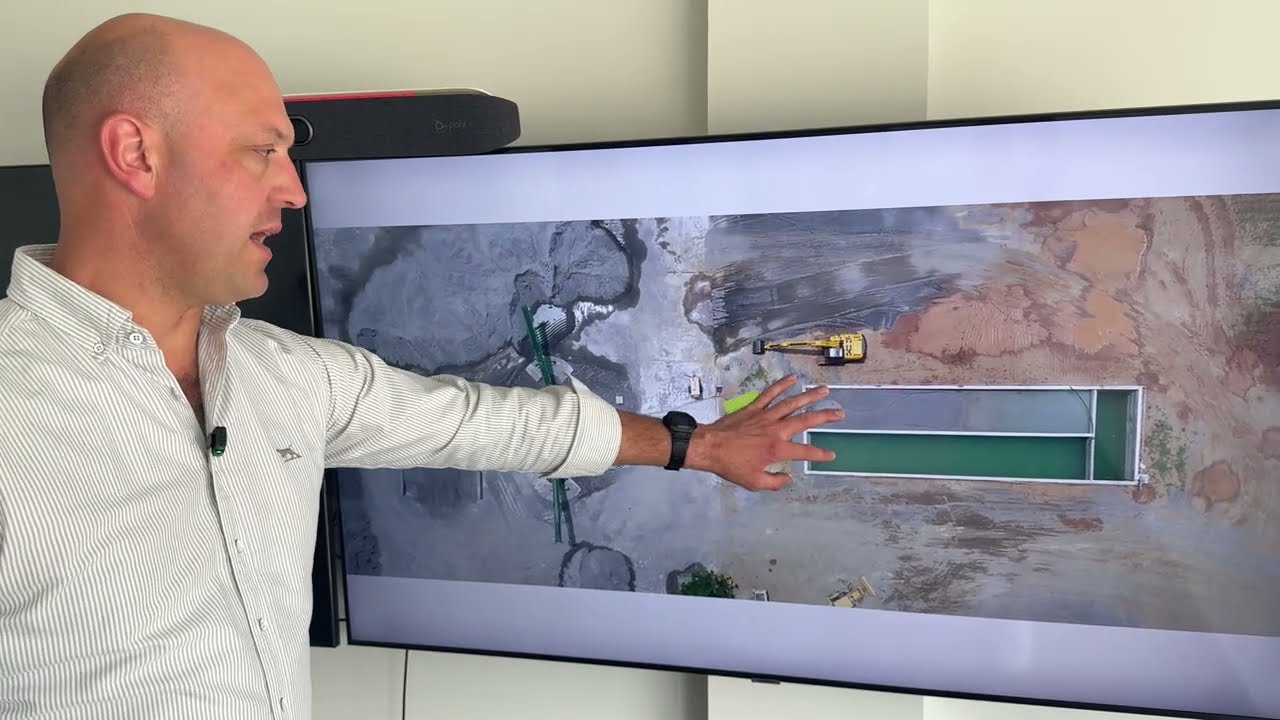
The thickened silt is then pumped from the thickener to the Easy Settle ponds. The system Jeremy shows is a three-bay layout:
- Two settlement bays - where the silt is pumped in and settles out.
- One freshwater collection bay - which collects the clean water.
Silt is pumped into the first bay and settles. The clearer water rises and flows over a weir into the freshwater collection bay, and from there it is piped back to the plant to be reused. That means water is recovered twice: once at the thickener and again at the ponds.
Stage 3: Switch bays and dig out
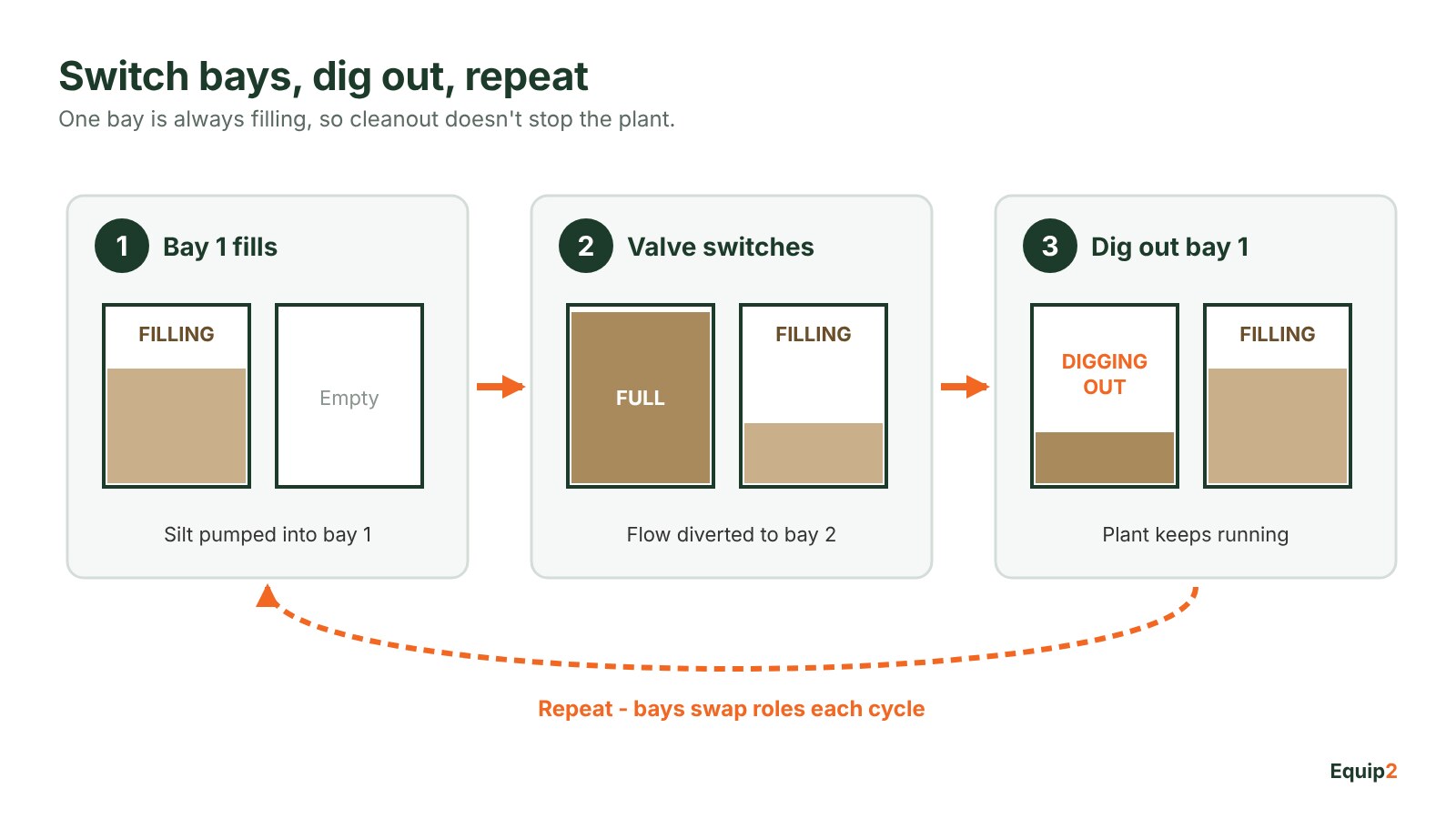
This is the step that keeps the plant running. Once the first bay is full, a valve switches the flow over to the second bay and the process repeats. While the second bay fills, the first one can be left to firm up and then excavated.
"Once this bay is full, there is a valve that will switch over to the filling of this bay and the process will repeat." - Jeremy, Equip2
With a single pond, cleaning out often means stopping the plant. With two settlement bays, one is always filling while the other is being emptied, so cleanout can happen without stopping production.
What happens to the silt?
Once a bay is full and has firmed up, the material is excavated and taken away. In the system shown, it goes to landfill. Depending on your site and the material, there may be other options worth exploring, such as using it in site rehabilitation - talk to your local council and our team about what suits your operation.
Easy Settle ponds vs a single settling pond
- Cleanout without stopping - two bays let you keep running while one is dug out.
- Cleaner return water - the thickener removes most of the silt before the ponds, and the weir gives a second stage of settling.
- Less pond space - because the thickener does most of the work, ponds don't need to be as large as a pond-only system.
- Easier management - silt is contained in defined bays instead of spreading through a large pond.
Things to consider before you build
- Consents - regional councils commonly ask how pond sludge will be managed, including how often ponds are cleaned out, how much material is removed and where it goes. Plan this up front.
- Space and access - you need room for the bays and for an excavator and trucks to get in and out.
- Your material - clay content affects flocculant choice, settling time and how fast bays fill.
- Water supply - the more water you recover, the less you need to draw, which matters most on sites with limited water.
Related reading
- How do hydrocyclones work?
- How does a dewatering screen work?
- Inside the wash plant swap that cost zero days of supply
Talk to us about your water and silt setup
Every site is different. If you'd like to talk through how an Easy Settle pond system could work with your wash plant, the Equip2 team is happy to help. Get in touch below.
Disclaimer: The information in this article is general in nature. We recommend you seek professional advice by contacting Equip2 for context specific to your application before using information found in this blog.