Crushing Efficiency, Built for Operators
In a quarry, profitability isn’t won in the boardroom. It’s won in the pit—minute by minute—when the plant keeps running, the belts keep tracking, and the crusher keeps eating without choking.
Because downtime doesn’t just pause production. It inflates your cost per tonne.
Every unplanned stop triggers the same chain reaction: the excavator keeps feeding until someone calls it, the loader starts reshuffling, the crew drifts into fire fighting mode, and your tonnes-per-hour target bleeds out through a dozen “little” issues that never show up clearly on a spreadsheet.
That’s why Bert’s walkthrough of the R5e lands with quarry owners who care about margin. He focuses on the real enemy: stoppages, blockages, slow maintenance, and wasted crushing energy. And the R5e’s role is simple—be the machine that keeps you producing when conditions, wear, and randomness try to slow you down.
Profit starts with flow: running hard without blockages
If you’ve operated an impactor circuit, you know the pain: feed surges, fines packing, and blockages that turn a productive day into a stop-start mess. That’s not just annoying—it’s expensive.
Bert points straight at a key design intent that quarry owners will immediately understand as profit protection: the discharge arrangement that lets you push consistent feed rates and reduce the downtime that comes from choking.
It’s built so the plant “can run at maximum feed all the time, to minimize any blockages.”
That one line is a quarry owner’s music.
Maximum feed isn’t bravado—it’s stability. And stability is what reduces trips, reduces clearing events, protects belts, protects operator rhythm, and ultimately protects output. When a machine runs consistently, your crew stops reacting and starts producing.
The big money lever: bypassing material that doesn’t need crushing
In most quarries, one of the quietest margin killers is crushing rock that didn’t need crushing.
Every unnecessary pass through the impactor means:
• Extra wear on blow bars and liners,
• Extra load on the drive,
• Extra recirculating material,
• Extra fuel/electricity,
• and more risk of a stoppage.
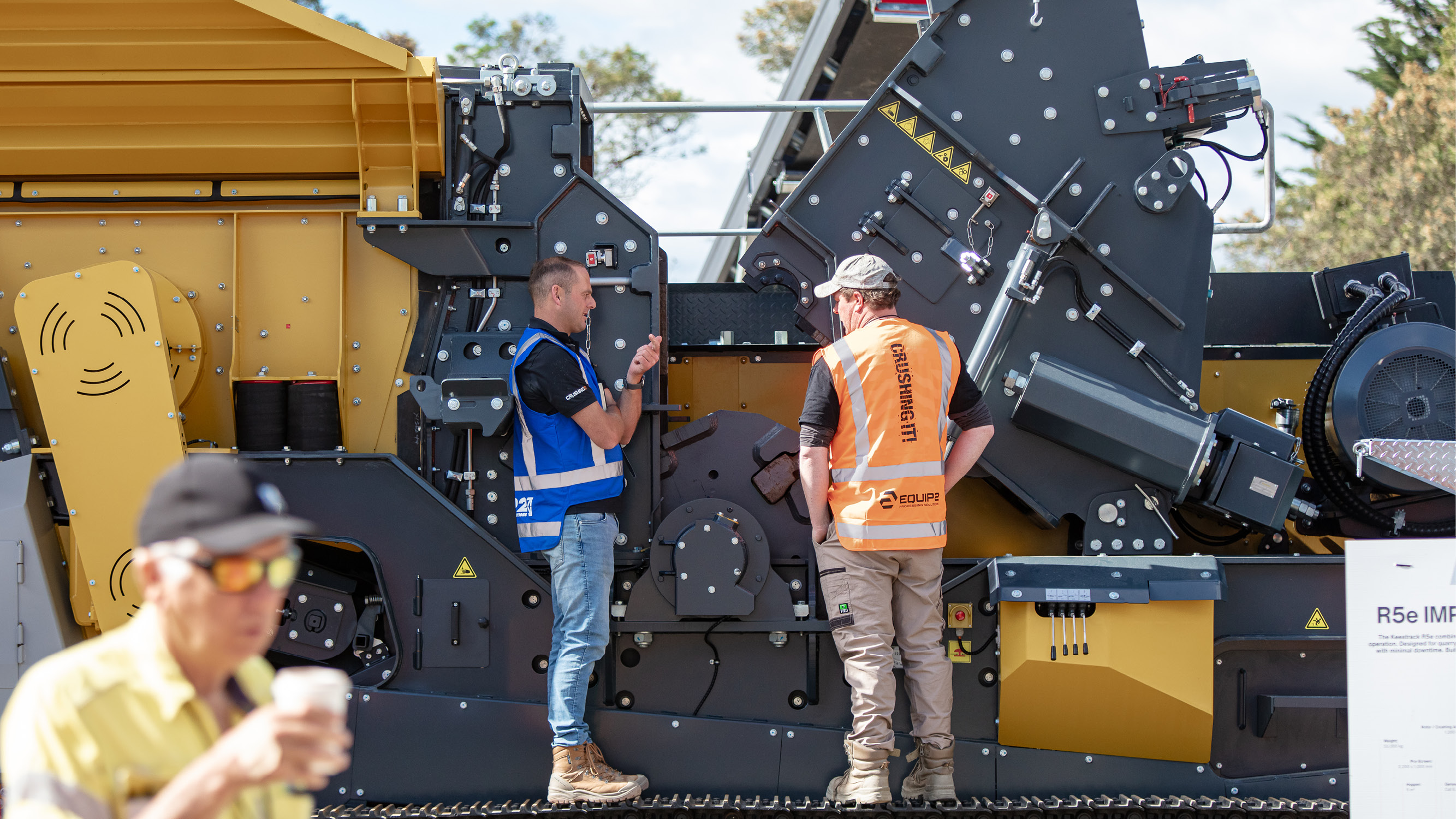
Bert explains the pre-screen/bypass philosophy in operational terms—but the profitability message is loud:
I’m trying to maximize the amount of [material] to pull out or to bypass the impactor. So that makes a huge difference to our cost and our total throughput.
If you’re a quarry owner, translate that into cost-per-tonne control.
You’re not paying to reduce rock that’s already in spec. You’re preserving the crusher for value-adding reduction, reducing wear cost, and increasing plant capacity because the impactor isn’t being forced to do pointless work.
This is where the R5e becomes more than a machine. It becomes a margin strategy.
Throughput you can actually bank: conveyors and screening that don’t bottleneck
Every quarry has a theoretical capacity number. Owners care about what lands in the stockpile.
Bert’s walkthrough backs throughput with the two parts that often decide the “real” rate: conveyor capacity and screening capacity. If either is undersized, your crusher can be a beast and you’ll still bottleneck.
He highlights the sheer carrying ability of the system:
“We see… up to 600 tonnes per hour on these conveyors.”
That’s not just speed. That’s headroom.
Headroom is what prevents the plant from feeling “on edge” all day. It’s what lets you stay ahead of surges. It’s what protects you from constant fiddling, throttling, and micro-stoppages that quietly rob production.
And the screening capacity? He puts it plainly:
“Our screening capacity on this five is absolutely massive.”
In quarry terms, that means better scalping, better separation, less carryover, and less reprocessing. It also means you’re better equipped to hit grading targets reliably without turning your loader into a full-time “blend and pray” operation.
Downtime wins are usually maintenance wins
Quarry owners know a hard truth: maintenance time is production time. What you can service quickly is what you can keep running.
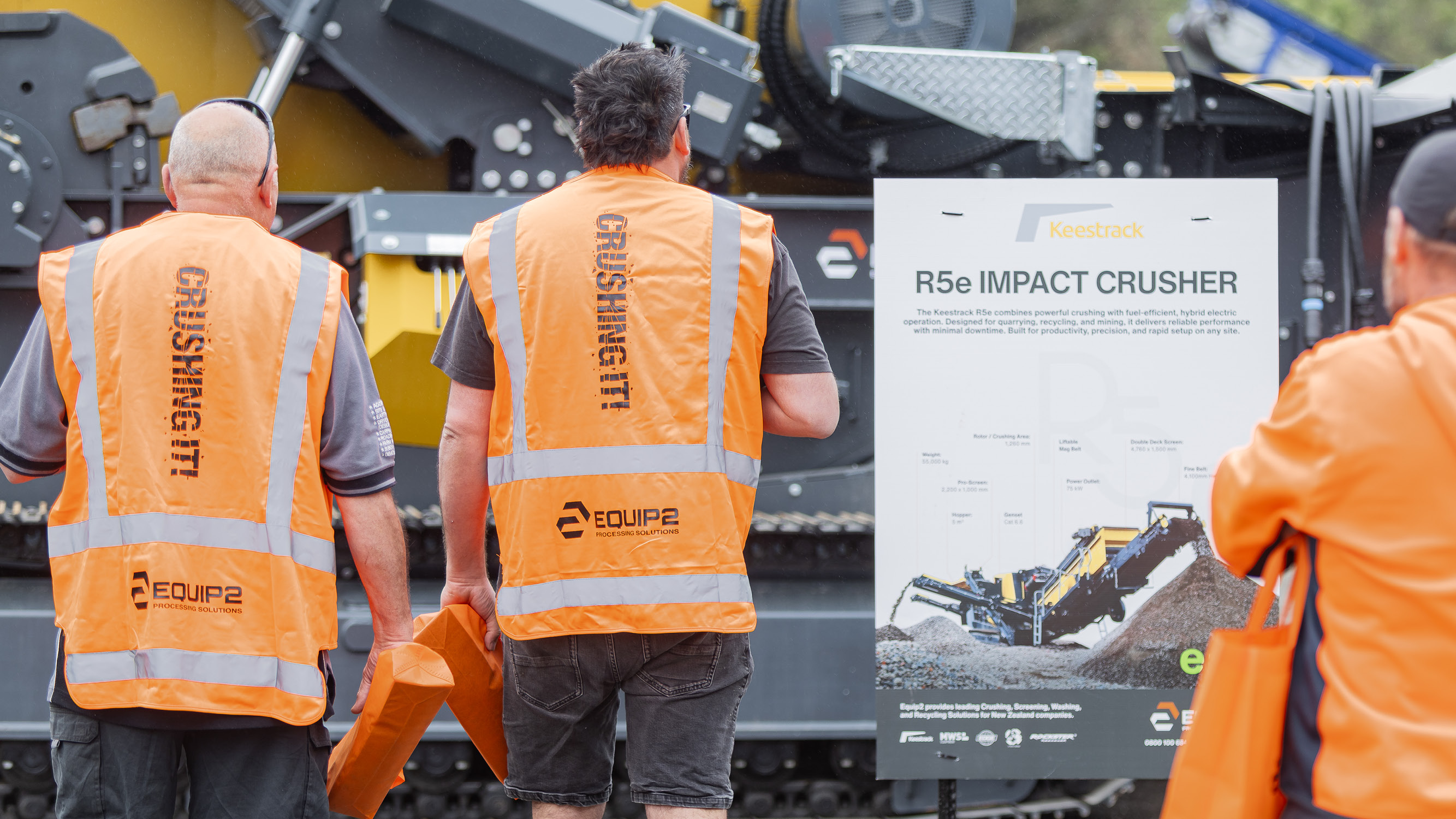
Bert spends time on service access because he knows exactly where downtime comes from—wear parts, belts, and awkward jobs that take longer than they should.
On the under-screen conveyor, he highlights a design choice that directly reduces downtime during belt issues:
“That whole conveyor can slide out of the back of this machine… making [it] a lot easier for a belt.”
That’s not small. Belt work is one of those “simple” issues that can ruin a day if access is poor. A slide-out conveyor can mean the difference between a managed maintenance event and a shift-destroying shutdown.
He reinforces this theme again in screen media handling:
“We move three bolts, and then that screen media can slide out the back.”
This is how you keep downtime from spreading. Fast, repeatable servicing keeps the plant from becoming fragile.
The profitability headline: cost per tonne (not just fuel)
Quarry owners don’t buy machines to feel good. They buy machines to lower cost per tonne and raise effective production.
Bert’s most owner-relevant line is the one that ties efficiency and output directly to the metric that matters most:
“Not only getting fuel savings and energy savings but also getting that increase of production… it’s what makes the difference to our cost per tonne, At the end of the day.”
This is the story in one quote.
Fuel savings alone are nice. But increased production is the multiplier because it spreads fixed costs over more tonnes. When you raise tonnes-per-hour and reduce stops, your whole operation gets cheaper per tonne—even if nothing else changes.
That’s how quarries get more profitable without chasing price rises.
Turning one feed into multiple revenue streams
The smartest quarries don’t just produce rock—they produce options. They make multiple products and sell to multiple markets, so margins don’t depend on a single spec.
Bert frames this capability with a line that’s pure value:
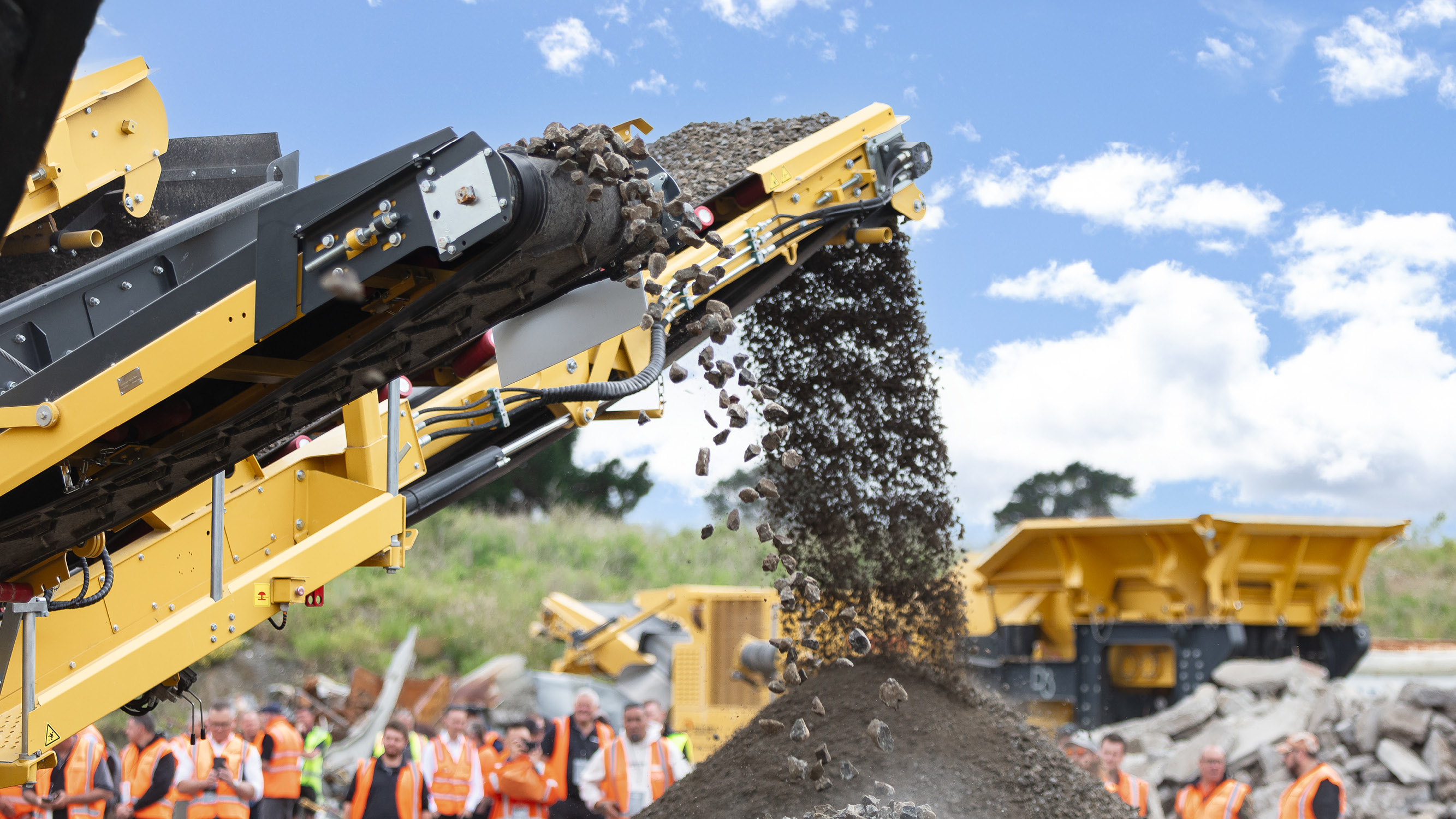
“We can make four products in one… go.”
Four products in one run changes your commercial flexibility:
• You can meet varied customer specs without constant
changeovers,
• You can build multiple saleable stockpiles in parallel,
• And you can keep selling even when one product line slows.
It’s not just volume. It’s resilience.
Reliability isn’t just steel — it’s electrics protected from dust and vibration
Quarry downtime often comes from the environment: dust ingress, vibration fatigue, random electrical faults that waste hours while everyone hunts for a cause.
Bert points to protection engineered into the electrical system:
“Spring mounted… doesn’t get affected by vibration… [with] a positive airflow… pressurized… keeps out the dust.”
Owners may not geek out on electrical cabinets—but they understand what electrical faults cost: time, labour, lost production, and operator confidence.
Protection here is uptime insurance
The takeaway: “little details” that stop big profit leaks
Bert’s walkthrough keeps returning to one core idea: the difference between a “good” machine and a profitable one is the detail that prevents downtime from happening in the first place.
He sums it up like this:
“There’s a lot of detail that's gone into, that makes all the difference.”
And in a quarry, “all the difference” usually looks like this:
• Fewer blockages,
• Faster maintenance,
• Less unnecessary crushing,
• More saleable products,
• Higher real throughput,
• And a lower cost per tonne that shows up in the month-end numbers.
Not only getting fuel savings and energy savings but also getting that increase of production… it’s what makes the difference to our cost per tonne, at the end of the day.