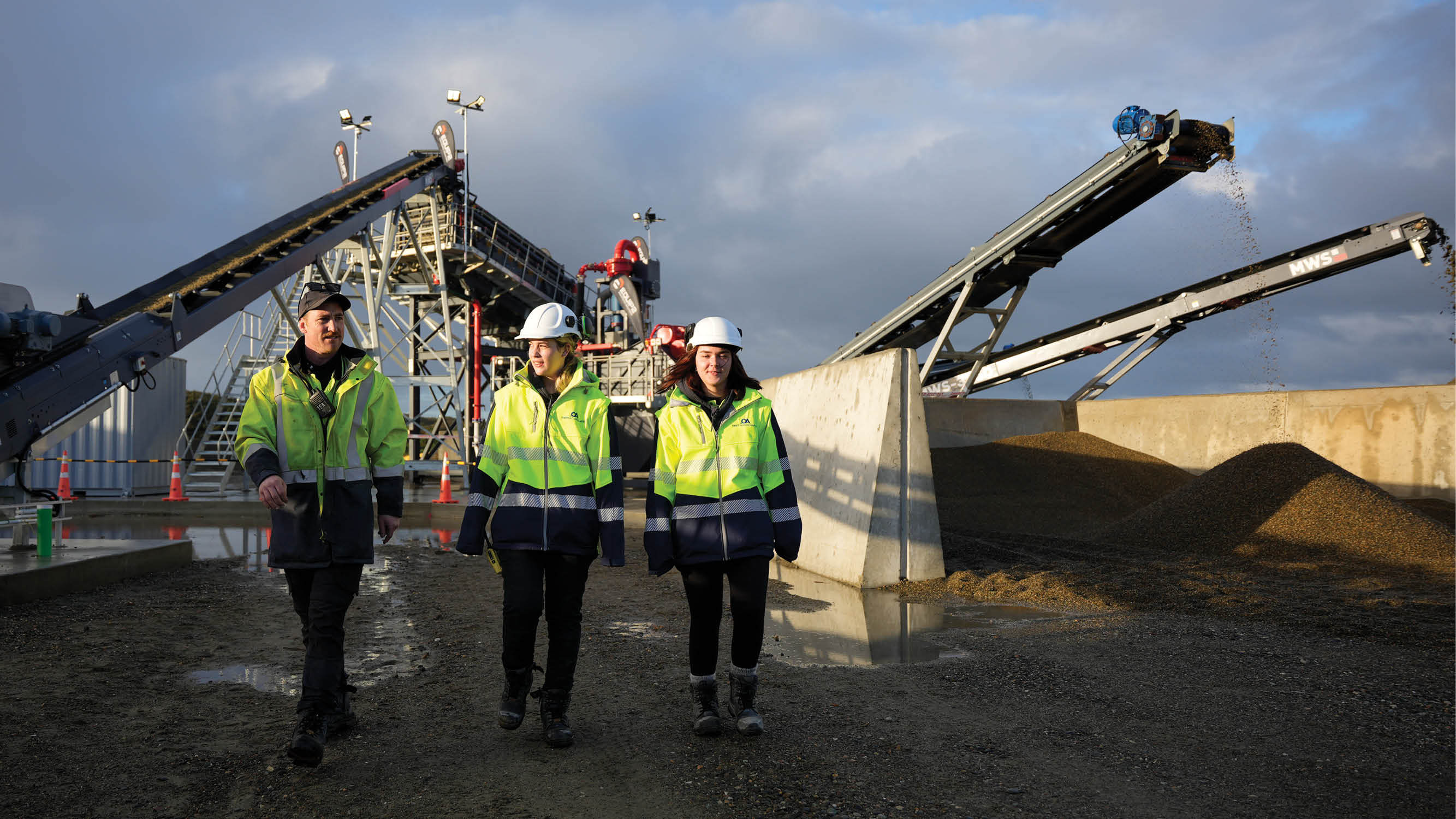
45 TO 125 TONNE AN HOUR: HOW ORETI AGGREGATES STOPPED CHASING ITS TAIL
A new modular wash plant has nearly tripled throughput at the Invercargill quarry - and turned in-spec sand from a daily battle into a switch-on-and-run job.
“It's been a massive change in the mentality of the team out here.” - Richie Sutherland
A Plant that had Run its Course
Oreti Beach doesn't make life easy for a wash plant. Sand is in the ground, in the feed, in the air - the raw feed at the local site runs as high as 65% sand, one of the toughest washing duties in the country.
Richie Sutherland is Quarry and Operations Manager for International Speciality Aggregates and Oreti Aggregates, HW Richardson Group businesses in the contracting division alongside SouthRoads, SouthRail, SouthDrill, Coal Pit Aggregates and Kilmog Quarries. Two sites at Oreti Beach, a couple of kilometres apart, do very different jobs: one feeds the export trade; the other keeps Invercargill supplied with gravel and concrete aggregate, with Allied Concrete chief among the customers at the end of the conveyor.
The plant serving the local site was a genuine performer in its day - an award winner at the Quarry Conference when new. But after 18 years of hard running in that feed, it had simply run its course, and washing technology had moved a long way on.
"We took over the site almost 24 months ago. Once we got a handle on operations and the plant, we identified we were really struggling with water pressure, so naturally we struggled with the washing side, with our sand spec - and actually struggled just to keep up," Sutherland says. Push the plant too hard and it broke, so the team ran it gently just to keep something moving off site each day.
Meanwhile, demand kept climbing. "The local companies were taking out more than we could produce in a day." The gap between what Southland needed and what Oreti Aggregates could produce was widening by the month.
Designed Around the Site, Not the Brochure
Once the business case was settled, the search began for a partner who could do more than sell steel. "In the early stages, we contacted a couple of companies about working on the quoting and design side of this," Sutherland says. Equip2 separated itself quickly.
"They got right in-depth and detailed on the strategic side. We sat down, liaised with them on what we actually wanted to achieve, what our raw material was, the problems we were having with our current plant setup, and what we were hoping to get out of the new build."
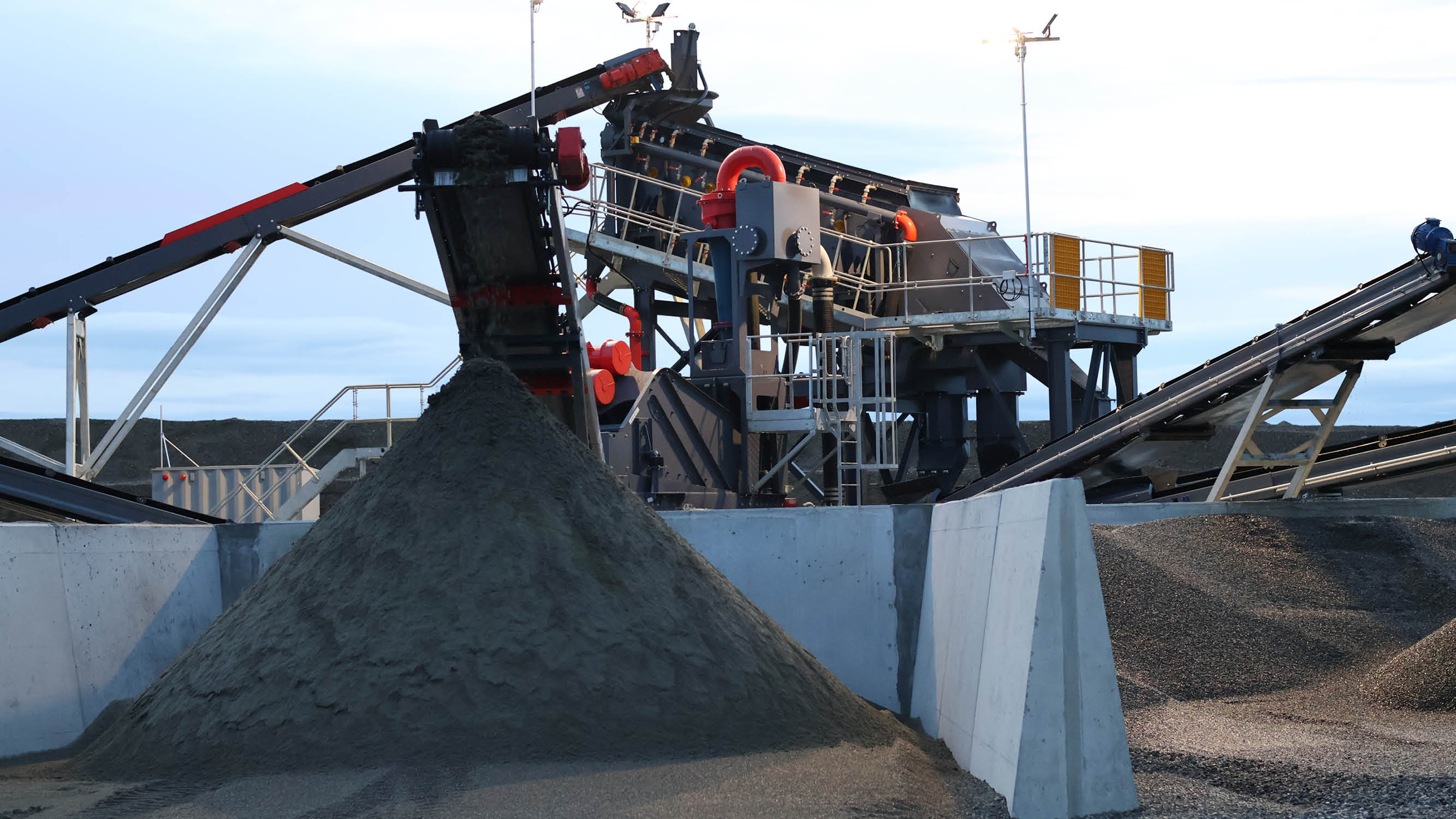
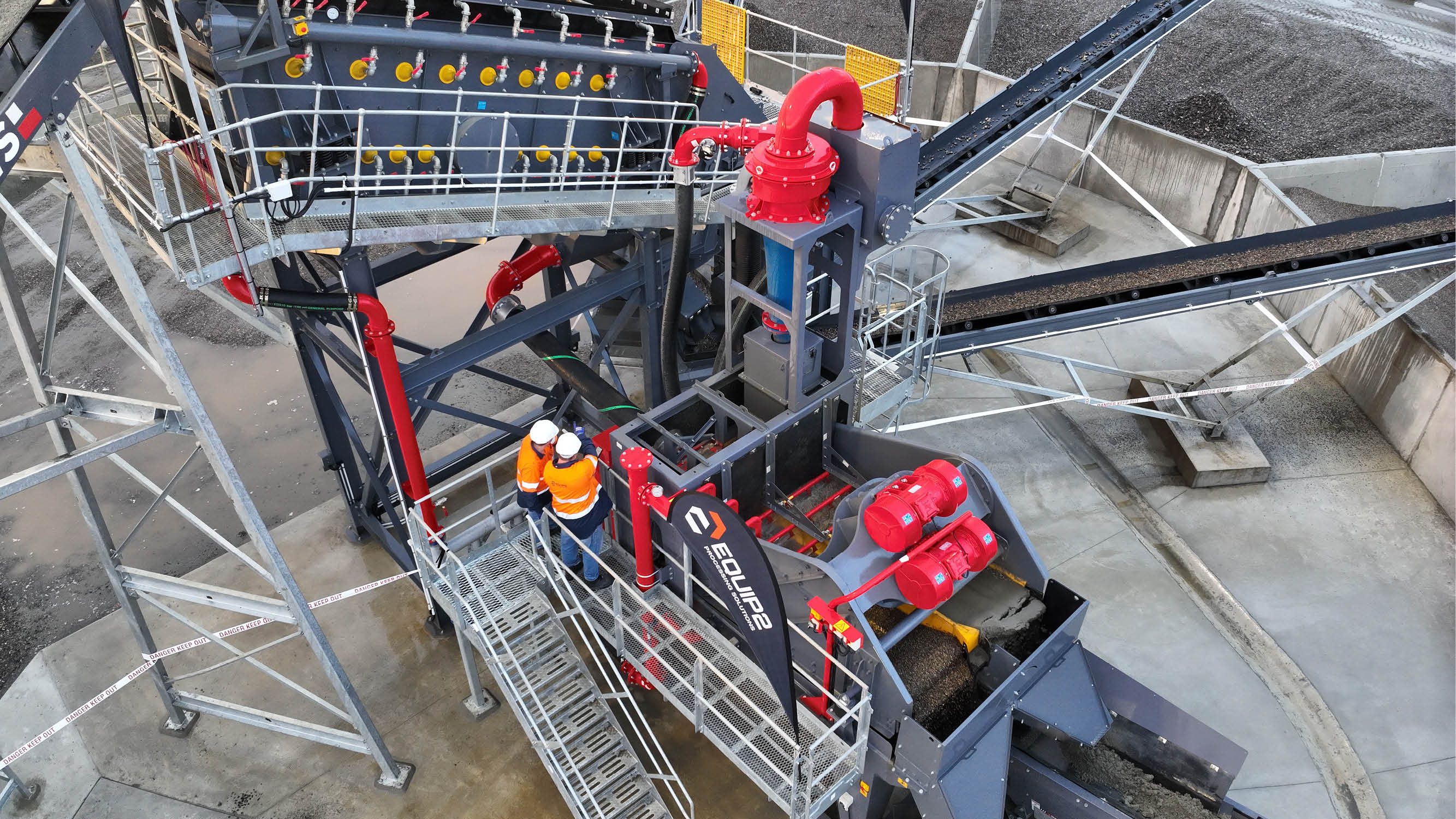
That thinking shows in the finished plant: a high-grade marine paint finish to stay ahead of the salt air, with a lower-half repaint already pencilled in for five to ten years' time; a deliberately angled position worked out around truck flow and the weighbridge; and a design stress-tested with the manufacturer before any steel was ordered - no surprises on site.
The Results
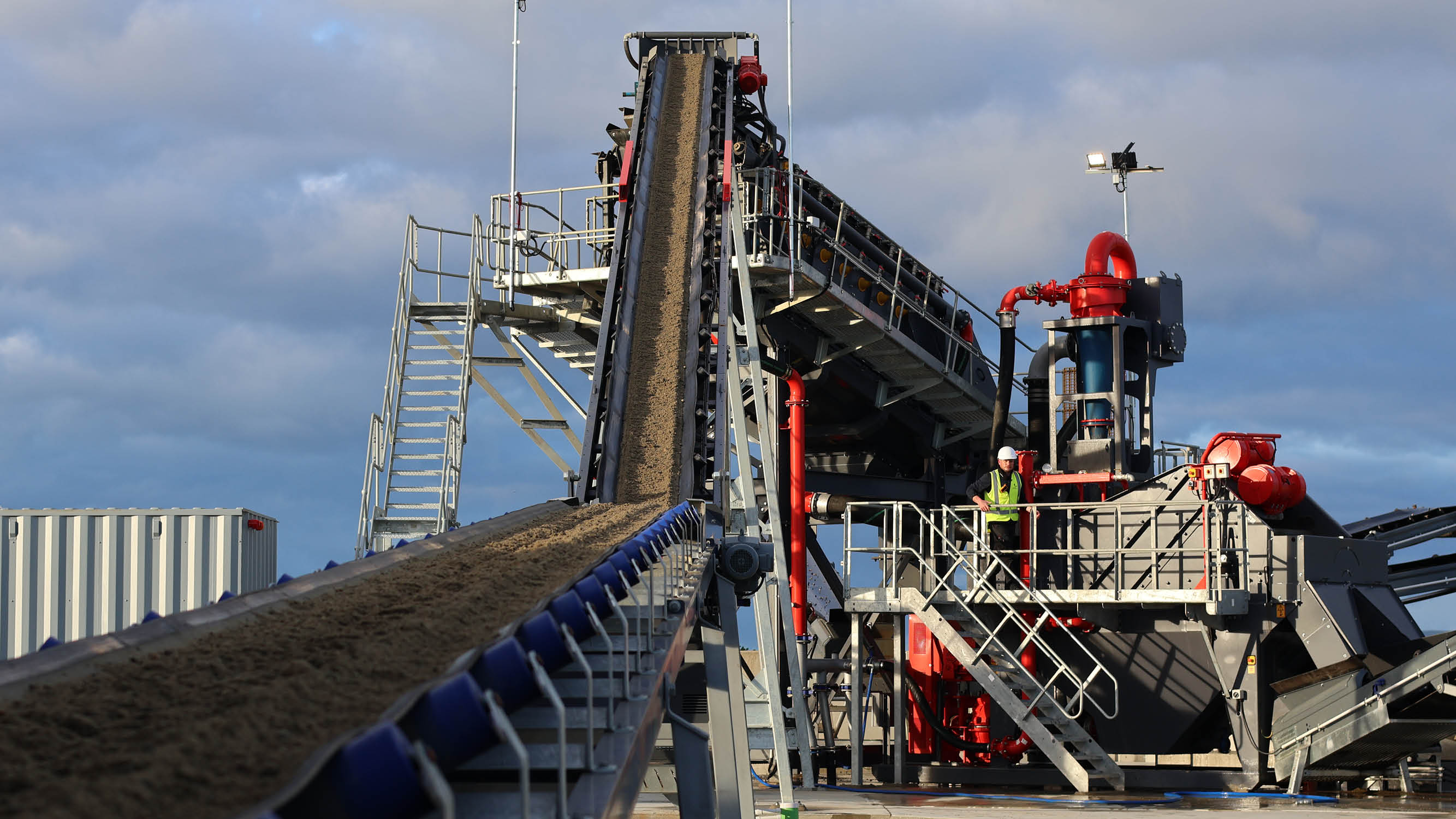
The old plant managed 45 tonnes an hour on a good day. The new one runs at 125 - throughput has nearly tripled. With a feed this sand-heavy, nobody was entirely sure what the new plant would deliver until it was in the ground and running, which makes the number land even harder.
Just as important is what comes off the belt: consistent, in-spec sand, day after day. If the feed changes, screen media can be swapped in around ten minutes, so the team can correct the sand's fineness modulus on the spot instead of working around whatever the plant produced that day. For concrete customers, that consistency is the product - it's what turns tonnage into sellable value.
“We worked with them on design, layout, on location, on site - traffic management and positioning on site in relation to the weighbridge. Equip2 were fantastic on the strategic side.” - Richie Sutherland
Running it is now the easy part. "Our ability to now turn the plant on, actually get some material through it, get something out into stockpiles and load up trucks to help the Southland infrastructure - something we've really struggled with in the past - to be able to have those numbers and the return on that side is fantastic," Sutherland says.
But talk to Sutherland for long and the tonnage isn't the headline. The plant has handed his team back the ability to plan rather than react: maintenance is scheduled instead of forced, and attention has shifted to extraction - running deliberate campaigns to build feed stockpiles, then switching the plant on and letting it work.
That's the real change at Oreti Beach - not just what the plant produces, but what it has freed the team to do. "It's definitely something we're proud of to put into action for our business."
The bottom line
45 to 125 tonnes an hour, in-spec sand every day, a plant you switch on and let run. Oreti stopped surviving and started producing.
“We can actually have productive days, rather than feel like we're chasing our tail every day.” - Richie Sutherland