
How Does a Dewatering Screen Work in Sand Washing & Aggregate Processing?
Dewatering screens play a critical role in sand washing and aggregate processing. A common question we hear at Equip2 is: how does a dewatering screen work? This guide explains the process step by step and shows how these screens efficiently reduce moisture content in fine materials.
What Is a Dewatering Screen Used For in Sand Washing Plants?
A dewatering screen is designed to remove excess water from sand and other fine materials after they have been washed. The objective is to produce a finished product with a moisture content of around 9–10%, making it easier to transport, stockpile, and reuse.
Dewatering screens are commonly used in:
- Sand washing plants
- Aggregate processing operations
- Recycling and mineral processing applications
Key Components of a Dewatering Screen for Aggregate & Quarry Applications
A typical dewatering screen consists of:
- A screen deck with fine apertures or slot
- Twin counter-rotating vibrating motors
- A steeply inclined screen bed
These components work together to create a linear vibrating motion, which is essential for separating water from solid material.
How Dewatering Screens Remove Water from Sand and Aggregates
The screen is powered by twin vibrating motors that generate forces of around five G's. This vibration moves material up the incline of the screen, rather than allowing it to flow downward.
This upward movement is key to effective dewatering, as it gives water multiple opportunities to drain through the screen while the solid material continues toward discharge.
Slurry Feed, Hydrocyclones & Initial Water Removal Process
The process begins when a slurry feed—a mixture of sand and water—enters the dewatering screen. This feed typically comes from:
- A hydrocyclone
- A coarse material washer
The slurry enters at a steep initial incline, where the majority of free water is quickly removed. This early stage is designed to strip out bulk water as efficiently as possible.
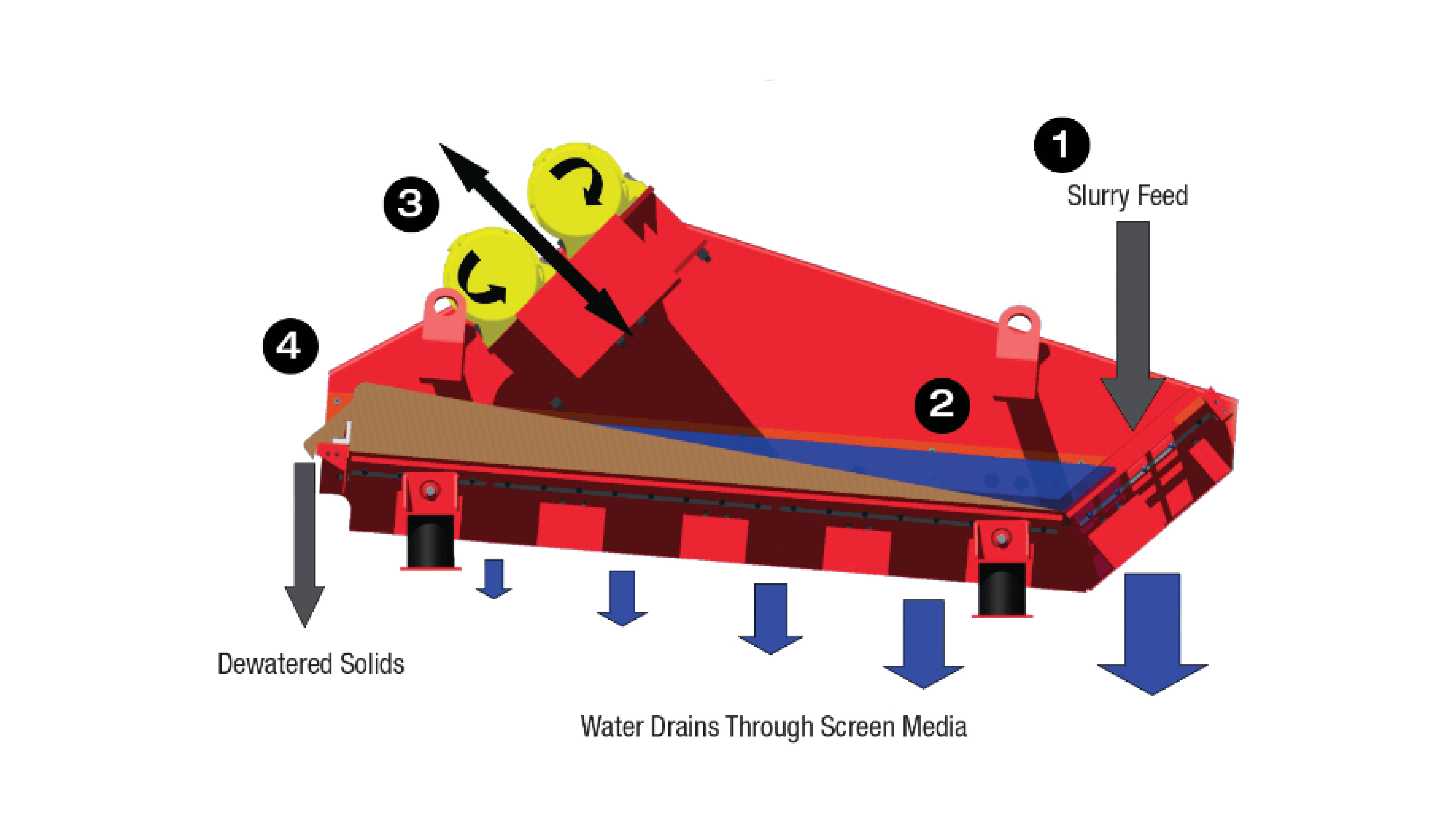
Sand and Water Separation on a Dewatering Screen Deck
Once past the initial incline, the material forms a bed on the screen deck. The vibrating motion causes the sand to lift and move upward, while water drains downward through the fine slots in the screen.
At this stage:
- Sand particles continue moving toward the discharge end
- Water is separated and expelled through the screen
- The material becomes progressively drier as it travels upward
Final Dewatering Stage and Discharge Moisture Control
Near the end of the screen, the material forms a thicker bed and remains there briefly. This short retention time allows any remaining water to drain out before discharge.
The dewatered sand then exits the screen and drops onto a collection conveyor, typically achieving a final moisture content of 9–10%.
Benefits of Dewatering Screens in Aggregate, Quarry & Recycling Operations
Using a dewatering screen can provide several operational advantages, including:
- Reduced moisture in final product
- Improved stockpiling and handling
- Lower transport costs
- Increased efficiency in washing circuits
Which Dewatering Screen is best
Choosing the right dewatering screen can significantly improve the performance of your washing plant. If you’d like to discuss how a dewatering screen could work in your operation, the Equip2 team is always happy to help.
Get in touch with us today to talk through your application and find the right solution.